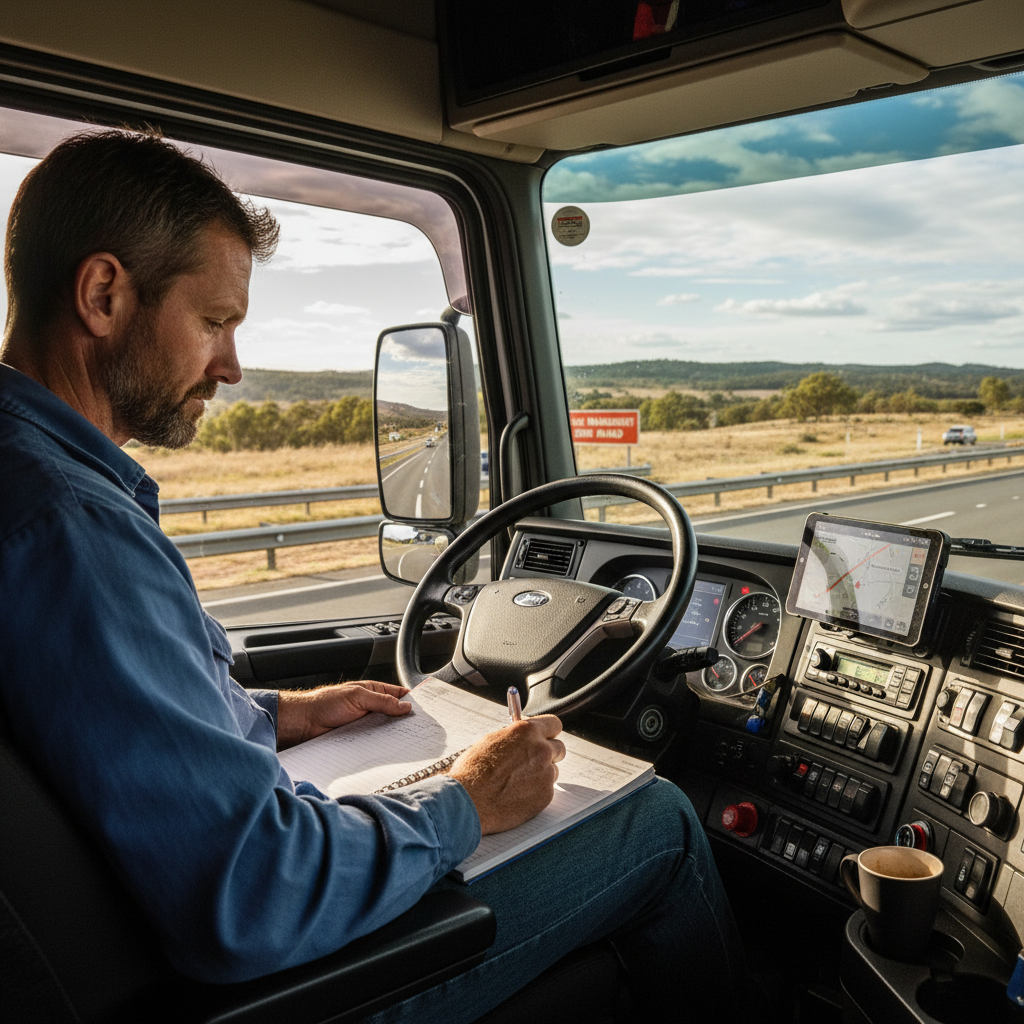
Heavy vehicle fatigue is one of the leading causes of serious crashes on NSW roads. The National Heavy Vehicle Regulator (NHVR) fatigue management framework exists to address this — and Basic Fatigue Management (BFM) is one of the regulated work and rest options available to drivers and operators who need more flexibility than Standard Hours allow.
Here’s exactly what BFM is, how it works, who needs it and what’s required to operate under it lawfully in NSW.
What Is Basic Fatigue Management?
Basic Fatigue Management (BFM) is a work and rest option under the NHVR Heavy Vehicle Fatigue Management framework that allows heavy vehicle drivers to work longer hours than Standard Hours — within defined daily and weekly limits — provided that both the driver and the operator meet specific accreditation requirements.
BFM is designed for operators who require scheduling flexibility that Standard Hours don’t accommodate, but who aren’t operating under the more demanding Advanced Fatigue Management (AFM) or Basic Fatigue Management with a Work Diary (BFM+WD) schemes.
How Does BFM Differ from Standard Hours?
Standard Hours is the default fatigue management option for heavy vehicle drivers in Australia. Under Standard Hours, specific daily and weekly work and rest limits apply, and no accreditation is required. BFM extends some of those limits — but requires both driver training and operator accreditation through the NHVR.
| Standard Hours | Basic Fatigue Management (BFM) | |
|---|---|---|
| Accreditation required? | No | Yes — operator + driver |
| Max work in 24 hours | 12 hours | 14 hours |
| Max work in 7 days | 72 hours | 84 hours |
| Rest in 24 hours | 7 hours continuous | 7 hours continuous |
| Work diary required? | Depends on distance | Yes |
| Training required? | No | Yes — BFM driver training |
Note: Work and rest hour limits are subject to NHVR regulation and may be updated. Always verify current limits at nhvr.gov.au.
Who Needs BFM Accreditation?
BFM applies to operators and drivers of fatigue-regulated heavy vehicles — generally vehicles with a GVM (Gross Vehicle Mass) over 12 tonnes, or combinations over 12 tonnes GVM. If your operation requires drivers to work beyond Standard Hours limits on a regular basis, BFM accreditation is the appropriate pathway.
Common BFM users include:
- Long-haul truck drivers operating interstate or regional NSW routes
- Livestock and agricultural transport operators
- Mining and resources supply chain operators
- Bulk freight operators with variable scheduling demands
- Refrigerated transport operators with time-sensitive delivery windows
Need BFM or fatigue management training in NSW?
Kells Safety Centre delivers accredited Driver Fatigue Management and Scheduler Fatigue Management training across Western Sydney and Wollongong. RTO 91528.
View All Courses →What Training Is Required for BFM?
To operate under BFM, drivers must complete approved fatigue management training. This training covers:
- The NHVR fatigue management framework and regulatory requirements
- How fatigue affects performance and risk — the science behind fatigue impairment
- BFM work and rest hour rules and how to apply them correctly
- Work diary requirements — how to complete, manage and present your work diary
- Fatigue risk management strategies — sleep, diet, health and scheduling
- Consequences of non-compliance — penalties, infringement notices, immediate compliance demands
Kells Safety Centre’s Drivers Fatigue Management course covers the NHVR framework in full, including BFM requirements, work diary obligations and practical fatigue risk management for NSW heavy vehicle drivers.
What About Schedulers and Operators?
BFM accreditation isn’t just a driver obligation — transport operators and schedulers carry their own legal responsibilities under the NHVR framework. A scheduler who directs a driver to work hours that breach BFM limits can be held liable for a compliance breach, regardless of whether they were in the cab.
Kells Safety Centre’s Schedulers Fatigue Management course is designed specifically for dispatch and operations staff — covering scheduling obligations, chain of responsibility under the Heavy Vehicle National Law (HVNL) and how to build fatigue-compliant rosters.

Chain of Responsibility and BFM
The Chain of Responsibility (CoR) provisions of the Heavy Vehicle National Law mean that everyone in the supply chain — not just the driver — has a duty to ensure safe practices. This includes schedulers, transport managers, consignors, consignees and loading managers. Under CoR, if a BFM-regulated driver is found breaching fatigue hours, the investigation extends up the chain to whoever directed or enabled that breach.
Understanding CoR is a critical part of any fatigue management training — and is covered in both Kells Safety Centre’s driver and scheduler fatigue courses.


Frequently Asked Questions
What is the difference between BFM and AFM?
Basic Fatigue Management (BFM) allows extended hours within defined limits with NHVR accreditation and driver training. Advanced Fatigue Management (AFM) goes further — it allows operators to design customised fatigue risk management systems that go beyond BFM hour limits, subject to NHVR approval and more rigorous documentation and monitoring requirements. AFM is appropriate for complex operations with highly variable scheduling needs.
Do I need a work diary under BFM?
Yes. A work diary is mandatory for drivers operating under BFM. It must be completed accurately for every trip and is subject to inspection by enforcement officers. Incorrect or missing work diary entries are a compliance breach and can result in penalties.
How do I get BFM accreditation as an operator?
Operator BFM accreditation is granted by the NHVR. You’ll need to apply through the NHVR’s accreditation scheme, demonstrate that your drivers have completed approved fatigue management training, and maintain compliant record-keeping systems. The NHVR website details current accreditation requirements and application processes.
Does BFM apply to all heavy vehicles in NSW?
BFM applies to fatigue-regulated heavy vehicles — generally those with a GVM over 12 tonnes or combinations over 12 tonnes. Light vehicles below this threshold are not subject to the NHVR fatigue framework, although WHS fatigue obligations under NSW law still apply to all employers and workers.
Can a driver choose to work Standard Hours instead of BFM?
Yes — BFM is a work option, not a mandatory requirement. Drivers and operators who don’t need to exceed Standard Hours limits are not required to obtain BFM accreditation. However, once an operator is accredited for BFM, drivers working under that operator’s accreditation must comply with BFM rules and work diary requirements.
Who delivers fatigue management training in NSW?
Fatigue management training must be delivered by a Registered Training Organisation (RTO). Kells Safety Centre (RTO 91528) delivers both Drivers Fatigue Management and Schedulers Fatigue Management courses at Wetherill Park and Wollongong. View our current schedule or call 1300 88 75 76.
Book Your BFM Course with Kells Safety Centre
Kells Safety Centre (RTO 91528) delivers the Drivers Fatigue Risk Management Course (BFM) across NSW — Wetherill Park and Wollongong, with onsite delivery for fleet operators. Courses run throughout the year. If you manage a transport fleet, we also deliver Schedulers Fatigue Management training covering Chain of Responsibility obligations for dispatchers and transport managers.
To check upcoming dates, contact us directly or view all courses.
Get your fatigue management training sorted with Kells Safety Centre.
Accredited driver and scheduler fatigue management courses delivered face-to-face across Western Sydney and Wollongong. RTO 91528. Stay compliant under the NHVR framework.
View All Training Courses →