

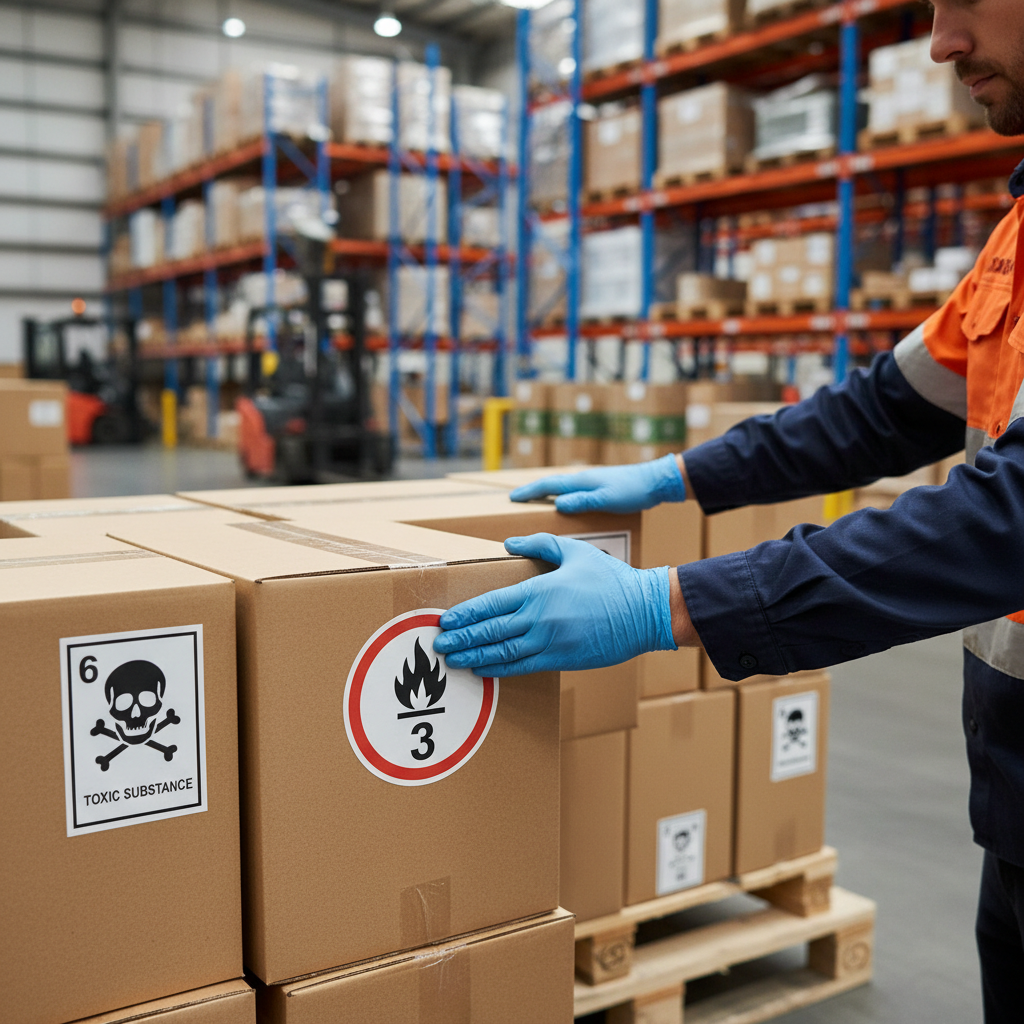
If you’re a consignor, freight forwarder, logistics coordinator, or warehouse manager shipping dangerous goods by road in NSW, you are responsible for preparing that shipment according to the Australian Dangerous Goods (ADG) Code. “Preparing” doesn’t mean just loading boxes on a truck — it means classifying the substance, determining if it requires a placard, completing the correct shipping documents, and applying the right labels and placards before handing it to a driver. Get this wrong, and you face Chain of Responsibility prosecution, EPA fines, and transport delays. Get it right, and your shipments move safely and compliantly across NSW.
Kells Safety Centre (RTO 91528) delivers the Prepare for Transport of Dangerous Goods course for consignors, freight forwarders, and logistics teams across NSW. This guide walks you through what “prepare for transport” actually means, the compliance steps you must follow, and how training closes the gaps that often trip up consignors.
- “Prepare for transport” = classifying DG, determining placard status, completing shipping documents, applying labels/placards, and briefing the driver — all before the transport operator takes possession
- NSW EPA and Chain of Responsibility law make consignors liable for incorrect preparation — not the driver or transport company
- The ADG Code is the Australian standard governing all DG classification and preparation requirements
- Kells Safety Centre’s Prepare for Transport course (RTO 91528) trains consignors on compliance steps and document requirements — half or full day, flexible scheduling
- Common mistakes include wrong classification, missing documents, incorrect labels, and failing to brief the driver
What Does “Prepare for Transport” Actually Mean?
In dangerous goods transport, “prepare for transport” is the consignor’s responsibility — it’s everything done BEFORE a transport operator takes possession of the goods. Under the ADG Code and NSW EPA regulations, the consignor must:
- Correctly classify the substance or mixture
- Determine whether it requires a placard at the quantities being transported
- Complete a dangerous goods shipping document with all required information
- Pack the goods safely and securely
- Apply the correct labels to packages and placards to the vehicle
- Provide the driver/transport operator with all required information — including a copy of the shipping document and a signed receipt
The consignor is the organisation or person shipping the goods. This could be a chemical supplier, a fuel distributor, an industrial business, a warehouse shipping goods to customers, or a freight forwarder acting on behalf of a shipper. Whoever is handing the goods to the transport operator for movement by road is the consignor, and they own the preparation responsibility.
Who Needs to Know How to Prepare DG for Transport?
The following roles and teams in NSW businesses shipping dangerous goods need to understand DG preparation:
- Consignors and shippers — anyone packaging and labelling DG for road transport
- Freight forwarders — consolidating or coordinating DG shipments on behalf of consignors
- Logistics and operations managers — overseeing DG shipping compliance and Chain of Responsibility obligations
- Warehouse and depot staff — packing, labelling, and preparing DG for pickup or delivery
- Transport coordinators — liaising between consignors and drivers to ensure documentation is complete
- Compliance and safety managers — ensuring the business meets EPA and transport law obligations
Even if your drivers have a dangerous goods licence (TLILIC0001), your consignment preparation team must also be trained. A driver cannot fix an incorrectly prepared shipment — they can only refuse it. The liability for preparation sits with the consignor under Chain of Responsibility and NSW EPA regulations.
The 7 Steps to Preparing a Dangerous Goods Consignment
Step 1: Classify the Substance
The first step is to determine what class of dangerous goods your substance belongs to under the ADG Code. The ADG Code defines 9 classes:
- Class 1 — Explosives
- Class 2 — Gases (compressed, liquefied, dissolved under pressure)
- Class 3 — Flammable liquids (petrol, diesel, solvents)
- Class 4 — Flammable solids (matches, metallic calcium, phosphorous)
- Class 5 — Oxidising agents and organic peroxides
- Class 6 — Toxic and infectious substances
- Class 7 — Radioactive material
- Class 8 — Corrosive substances (acids, alkalis, batteries)
- Class 9 — Miscellaneous (asbestos, polychlorinated biphenyls, lithium batteries)
Classification is based on the substance’s physical and chemical properties. The supplier or manufacturer of the substance should provide a Safety Data Sheet (SDS) that identifies the ADG class and any subsidiary hazards. If you’re unsure, you must check the SDS or contact the supplier — guessing on classification is a compliance risk and a Chain of Responsibility liability.
Step 2: Determine Placard Status
Not all dangerous goods require a placard. The ADG Code defines “placard load” thresholds for each class — minimum quantities above which a dangerous goods placard must be displayed on the vehicle. For example:
- Class 3 (flammable liquids) — placard required at 1,000 litres or more in aggregate on the vehicle
- Class 2 (gases) — varies by gas type; typically 10kg net water capacity or more requires a placard
- Class 8 (corrosives) — 250 litres or more in aggregate
If your shipment exceeds the placard threshold for its class, it is a “placard load” and requires a placard. If it’s below the threshold, no placard is required, but the shipping document and labels still apply. This distinction is critical — below-threshold shipments can be transported by drivers without a dangerous goods licence, but they still require correct documentation and labelling.
Step 3: Complete DG Documentation
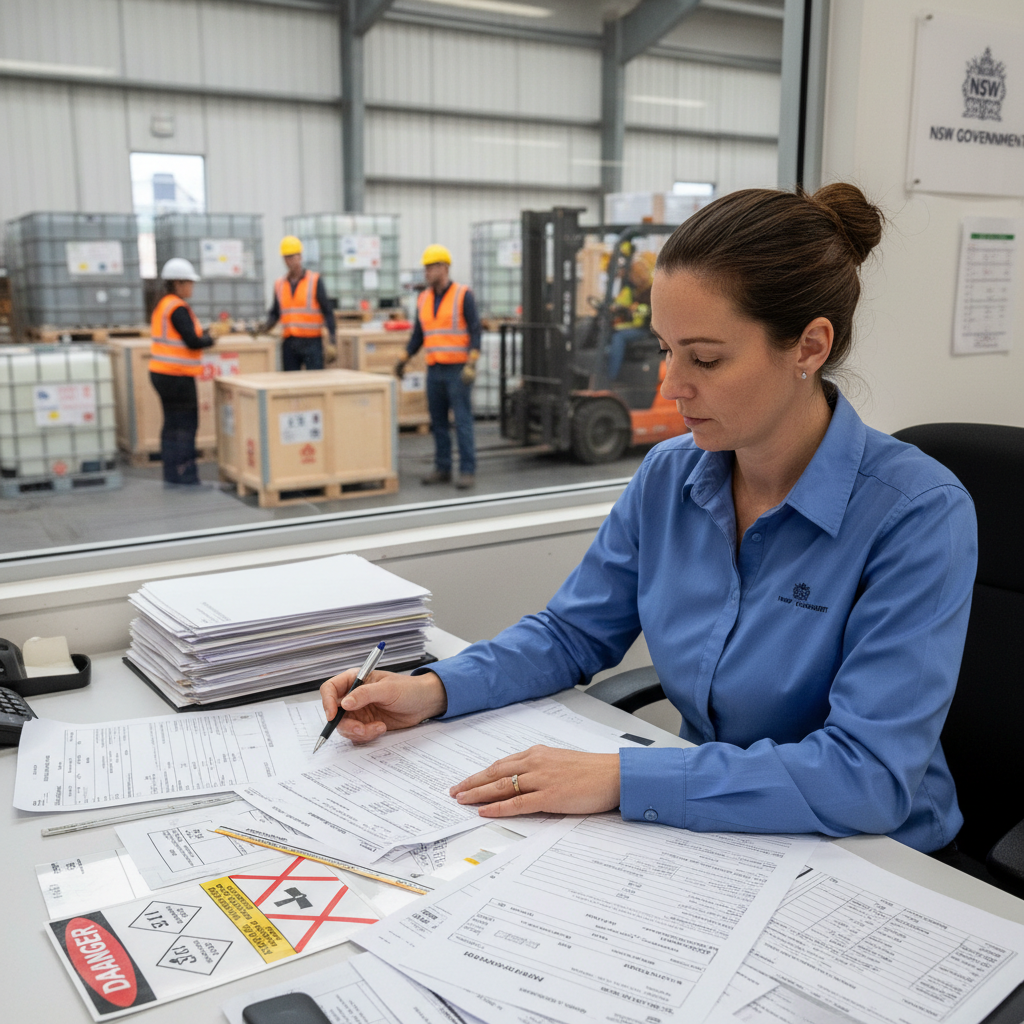
Every dangerous goods shipment requires a dangerous goods shipping document — a physical or electronic record that travels with the goods and is signed by both the consignor and the driver. The shipping document must include:
- Proper shipping name of the dangerous goods (as listed in the ADG Code)
- Class and any subsidiary hazards
- UN number (where applicable)
- Packing group (if assigned)
- Total quantity of dangerous goods
- Name and address of the consignor (you) and the consignee (destination)
- A statement: “The goods described above are fully classified, packaged, marked, labelled, and placareded in accordance with the relevant legislation and are in proper condition for transport”
- The date and signature of the consignor (you)
The driver must receive a signed copy before taking possession. The consignor and carrier must both keep copies for at least 12 months — this is an EPA and Chain of Responsibility requirement.
Step 4: Pack and Prepare the Load
Packing must ensure the dangerous goods are secure and will not leak, spill, or shift during transport. This varies by substance and transport conditions:
- Liquids must be in leak-proof containers with proper closures
- Multiple packages must be secured to prevent movement
- Incompatible goods (e.g., acids and bases) must be segregated
- Packaging must be appropriate to the hazard class and the quantity
For most commercial shipping, you’ll use standardized packaging (drums, cans, cartons, UN-approved containers, etc.). The packaging must be certified or rated for the goods being shipped. This is where a packing manual or the supplier’s guidance becomes critical — incorrect packing can cause leaks and safety incidents.
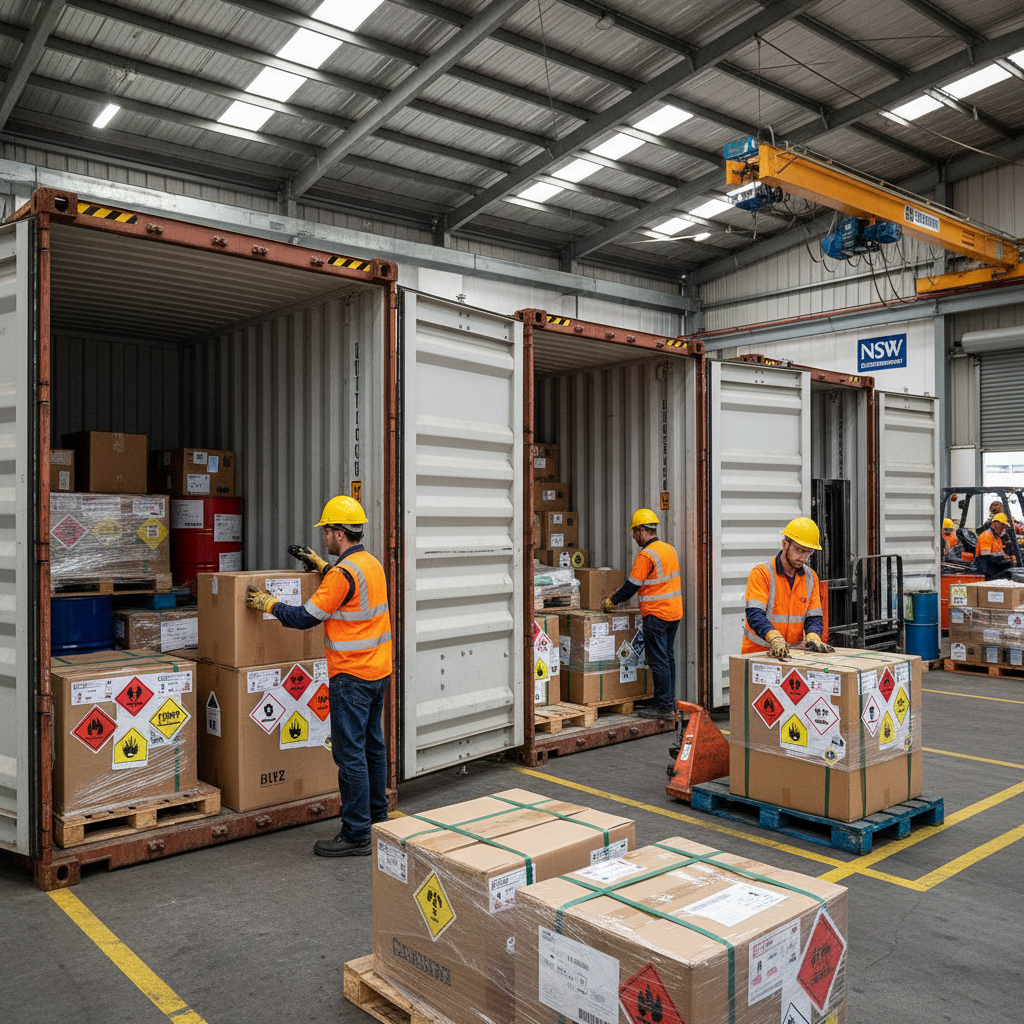
Step 5: Apply Labels and Placards
Labels go on individual packages; placards go on the vehicle (if placard load). Labels must display:
- The class diamond (symbol showing the DG class — red for flammable, yellow for oxidiser, black/white for toxic, etc.)
- The proper shipping name and UN number
- Subsidiary hazard labels (if applicable — e.g., a Class 3 flammable liquid that is also corrosive needs both labels)
Placards are large square labels (25cm x 25cm or 30cm x 30cm) displaying the class symbol and, where required, the UN number. They must be placed on the front, rear, and sides of the vehicle — easily visible, secure, and not obscured. Incorrect or missing placards are a major roadside compliance violation.
Step 6: Prepare the Shipping Document
As mentioned in Step 3, the shipping document is the compliance record. Complete it accurately, sign it, and ensure the driver receives a copy. Many businesses use a template or SOP to standardize this process — small errors in naming or numbers can flag a load as non-compliant.
Step 7: Brief the Transport Operator/Driver
Before the driver takes the vehicle, provide them with:
- A signed copy of the dangerous goods shipping document
- Clear information on the hazards and emergency procedures (in writing or verbally, documented)
- Confirmation that the load is correctly placarded and labelled
- Any special instructions (route restrictions, temperature control, segregation notes)
The driver MUST acknowledge receipt of this information and the shipping document. If they identify an issue with the load (missing labels, incorrect placards, unclear documentation), they are legally entitled and obligated to refuse the load. This is your quality gate — a trained, compliant driver will catch mistakes before they become roadside violations.
Consignor Training for Dangerous Goods Preparation
Learn the 7 steps to compliant DG preparation — classification, documentation, labelling, and driver briefing. Flexible half or full-day courses delivered by Kells Safety Centre (RTO 91528).
Common Mistakes in DG Preparation (and How Training Helps)
Consignors often trip up on these compliance gaps:
- Wrong classification — Checking the SDS but misinterpreting the hazard class or missing subsidiary hazards. A Class 3 flammable liquid that is also corrosive needs both Class 3 and Class 8 labels.
- Missed placard determination — Preparing below-placard quantities (which don’t require a placard) but still labelling them as if they did, or vice versa.
- Incomplete or incorrect shipping documents — Missing the consignee address, UN number, packing group, or the required consignor statement. Errors here can delay shipments or trigger EPA warnings.
- Inconsistent labelling — Applying wrong label sizes, orientations, or types. Labels must be durable, easily visible, and match the ADG Code specifications exactly.
- Poor driver briefing — Handing a stack of paperwork to the driver without walking them through hazards, emergency procedures, or special handling. A driver who doesn’t understand the load cannot respond to emergencies properly.
- No record-keeping — Not documenting who prepared the shipment, when, and any deviations. This leaves you exposed under Chain of Responsibility audits.
The Prepare for Transport of Dangerous Goods course at Kells Safety Centre walks through each of these steps in practical, hands-on sessions. Consignors work through real-world scenarios, learn how to read the ADG Code, complete shipping documents correctly, and develop processes that prevent common mistakes.
Frequently Asked Questions
Who is responsible for preparing dangerous goods for transport in NSW?
The consignor (the organisation or person shipping the goods) is responsible for preparing the shipment. This includes classification, documentation, labelling, and placarding. The consignor’s liability for correct preparation is enforced under Chain of Responsibility and NSW EPA regulations.
What is the difference between a dangerous goods label and a placard?
Labels are small hazard symbols applied to individual packages. Placards are large square labels (25cm x 25cm or larger) applied to the vehicle itself, and they are only required if the shipment is a “placard load” — exceeding the ADG Code threshold for its class. Every dangerous goods shipment requires labels; not all require placards.
Can a shipment be transported without a placard if it’s below the placard threshold?
Yes. If a dangerous goods shipment is below the placard threshold for its class, no placard is required on the vehicle. However, the shipment still requires correct labelling on packages, a dangerous goods shipping document, and can be transported by a driver without a dangerous goods licence (but it still must be correctly labelled and documented).
What information must be included in a dangerous goods shipping document?
The shipping document must include the proper shipping name, class, UN number, packing group, total quantity, consignor and consignee details, a statement that goods are correctly classified and packaged, and the signature and date of the consignor. A signed copy must travel with the goods and be signed by the driver on receipt.
What happens if a consignor prepares a shipment incorrectly and it is stopped at a roadside check?
The consignor, not the driver, is liable for preparation errors under Chain of Responsibility and EPA regulations. Fines, stop work notices, and prosecution can follow. The driver may refuse to transport the load, further delaying the shipment. Consignor training eliminates these risks.
How long must a consignor keep copies of shipping documents?
Both the consignor and the transport operator must retain copies of dangerous goods shipping documents for at least 12 months. This is an EPA requirement and a Chain of Responsibility obligation. Electronic records are acceptable if they can be reproduced and audited.
Are consignors required to train their staff on DG preparation?
While formal RTO training is not mandatory by law, consignors are liable for correct preparation under Chain of Responsibility. Documented staff training significantly reduces legal risk and demonstrates due diligence if audited. Many large logistics and chemical suppliers mandate staff training.
How can a consignor determine the correct ADG Code class for a substance?
The supplier or manufacturer of the substance should provide a Safety Data Sheet (SDS) that identifies the ADG class. If the SDS is unclear or unavailable, contact the supplier directly. Never guess at classification — this is a Chain of Responsibility liability.
Can a consignor use a freight forwarder or 3PL to prepare DG shipments?
Yes, but the consignor remains liable for the preparation even if a freight forwarder or logistics partner handles it. The freight forwarder must be trained and competent, and the consignor must verify that preparation is compliant. A written agreement outlining responsibilities is essential.
What is the Prepare for Transport course fee and duration?
Kells Safety Centre offers the Prepare for Transport course as a half-day or full-day session. Pricing and dates vary. Contact Kells on 1300 88 75 76 or email [email protected] to discuss your team’s needs and book a session.
DG Consignor Compliance Training
Kells Safety Centre (RTO 91528) delivers the Prepare for Transport of Dangerous Goods course for consignors, freight forwarders, and logistics teams. Flexible scheduling, practical scenarios, ADG Code mastery. Reduce Chain of Responsibility risk.