

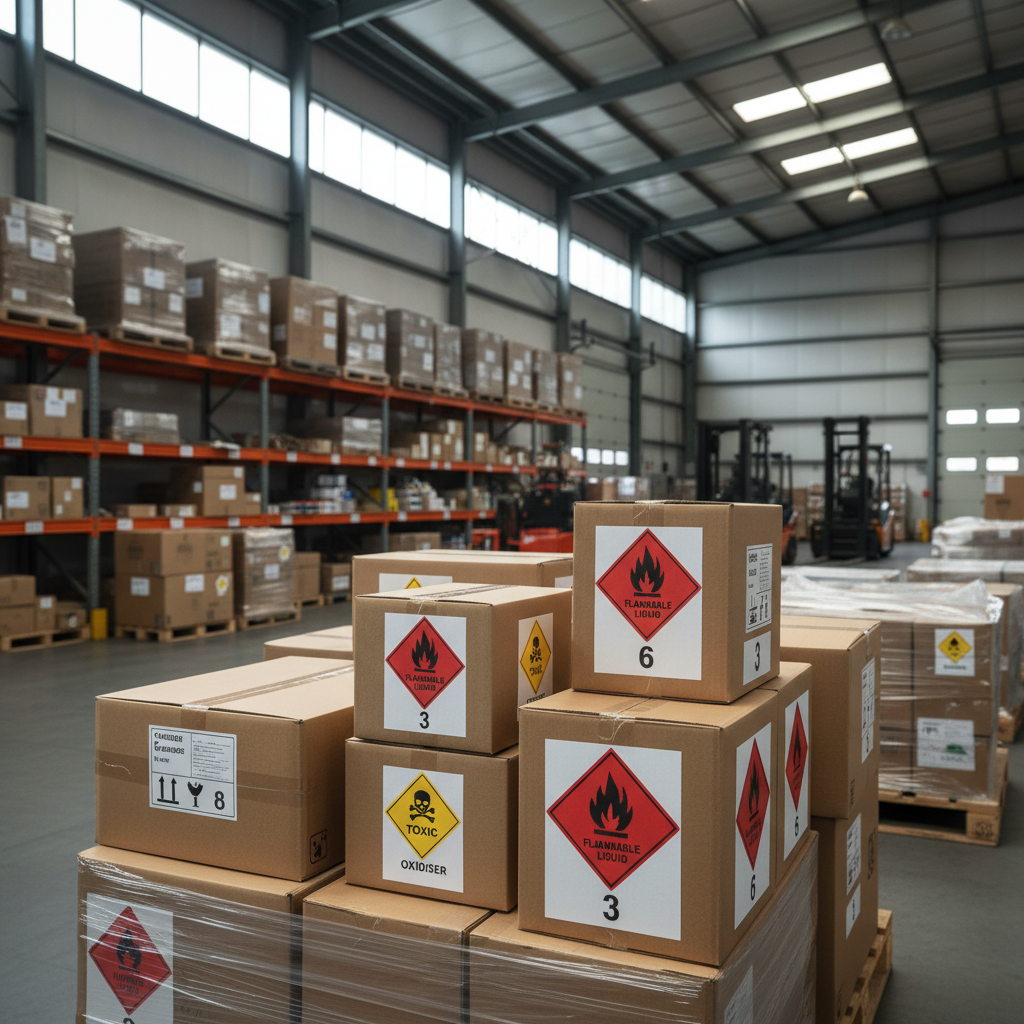
Before a dangerous goods consignment can legally move on Australian roads, it must meet strict preparation requirements set out in the Australian Dangerous Goods Code (ADG Code). These requirements cover classification, packaging, labelling, placarding, and documentation — and they’re not optional. Non-compliance risks penalties for the consignor, fines for the transport operator, and potential safety incidents.
If you’re a consignor, freight forwarder, warehouse manager, or logistics coordinator responsible for preparing dangerous goods for transport in NSW, this guide walks you through every step of the process — from initial classification all the way to handover for transport.
- The ADG Code defines all legal requirements for preparing DG consignments for road transport in Australia
- Consignment preparation involves 5 core steps: classification, packaging, labelling, placarding, and documentation
- The consignor (shipper) is legally responsible for correct preparation — not the transport operator
- Non-compliant consignments can be seized and the consignor can face penalties up to $550,000
- Training is available through Kells Safety Centre’s Prepare for Transport course
Who Is Responsible for Preparing Dangerous Goods Consignments?
Under the ADG Code and NSW transport law, the consignor — the party shipping the dangerous goods — is legally responsible for correct preparation. This includes:
- Manufacturers or suppliers shipping DG products
- Freight forwarders and logistics companies accepting DG shipments from customers
- Warehouse and distribution operators preparing orders for transport
- Chemical suppliers, fuel distributors, and any business moving placard-load quantities of DG by road
The transport operator (truck driver and carrier) cannot be held responsible for a consignment prepared incorrectly by the consignor. However, they can be prosecuted for transporting a non-compliant load if they knew or should have known it was non-compliant. This creates a legal obligation for both parties to verify compliance.
What Is Consignment Preparation Under the ADG Code?
Consignment preparation is the process of taking a dangerous good (a substance or article classified under the ADG Code) and preparing it for safe, legal transport by road. This means:
- Classifying the substance or article according to its hazard class (Class 1–9 under the ADG Code)
- Determining the appropriate packaging and containment for that class
- Labelling the package with hazard labels showing the class and subsidiary hazards
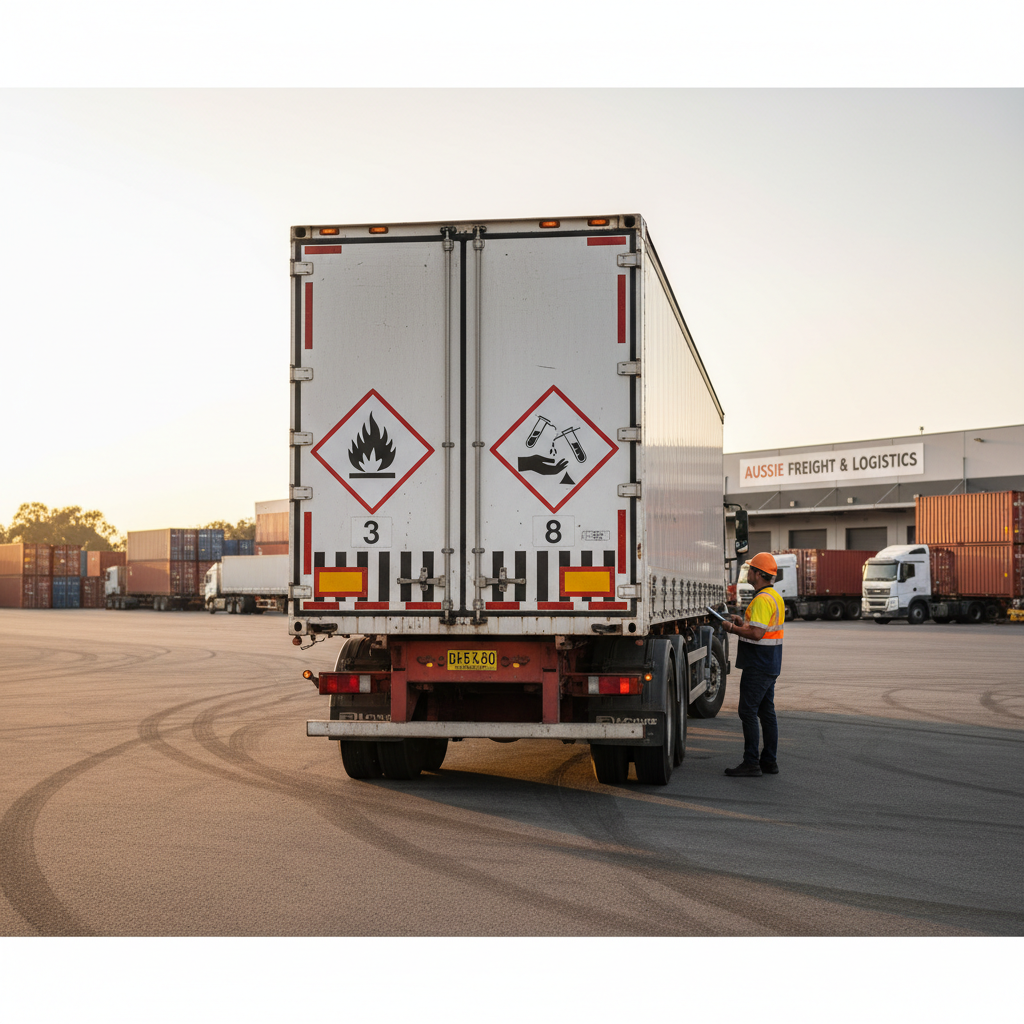
- Placarding the transport unit (vehicle) with placards matching the classified goods on board
- Completing documentation (dangerous goods declaration, shipping papers, consignment notes)
All of these steps are required by law. Missing any one of them makes the consignment non-compliant and puts the transport operator at legal risk.
Step 1 — Classify Your Dangerous Goods
Classification is the foundation of safe DG transport. Every substance and article that meets the definition of dangerous goods under the ADG Code must be assigned to one of 9 hazard classes:
- Class 1: Explosives (fireworks, ammunition, detonators)
- Class 2: Gases (compressed, liquefied, dissolved) — LPG, oxygen, chlorine
- Class 3: Flammable liquids — petrol, diesel, paint thinners, alcohols
- Class 4: Flammable solids — metals, matches, nitrocellulose
- Class 5: Oxidising substances and organic peroxides — hydrogen peroxide, pool chlorine
- Class 6: Toxic substances — pesticides, cyanides, arsenic
- Class 7: Radioactive material (rarely transported by road in NSW)
- Class 8: Corrosives — sulfuric acid, hydrochloric acid, alkalis
- Class 9: Miscellaneous — asbestos, lithium batteries, magnetic materials
To classify a substance, you consult:
- The ADG Code — the primary source of classification rules for Australia
- The supplier’s Safety Data Sheet (SDS) — which indicates the hazard class and any subsidiary hazards
- The ADG Code product list — a comprehensive table matching common substances to their class
Some substances have subsidiary hazards — meaning they belong to one primary class but also pose a secondary hazard. For example, a flammable liquid (Class 3) might also be toxic (Class 6). These must be reflected in both the labels and the placards.
Step 2 — Determine Packaging & Containment Requirements
Once classified, the dangerous good must be packaged according to the ADG Code’s packing group system. The three packing groups reflect the severity of the hazard:
- Packing Group I: High danger — strict packaging required
- Packing Group II: Medium danger — standard packaging
- Packing Group III: Low danger — basic packaging acceptable
For example, a Class 3 (flammable liquid):
- PG I liquid: Must be in a certified DOT/UN container rated for that substance
- PG II liquid: Can be in UN-marked plastic or metal containers of rated type
- PG III liquid: Can be in standard industrial containers if properly sealed
The ADG Code specifies:
- Material type (glass, plastic, metal, fibre board)
- Container volume limits
- Closure and sealing requirements
- Segregation from incompatible substances
- Use of absorbent material (for liquids)
- Protective packaging for fragile containers
Incorrect packaging is one of the most common causes of non-compliance. Containers must be in good condition, undamaged, and properly sealed before transport.
Step 3 — Label, Mark & Placard Your Consignment
Once packaged, each package must be clearly labelled with:
- Hazard labels — diamond-shaped labels (100 × 100 mm minimum) showing the hazard class symbol and class number
- Subsidiary hazard labels — additional labels if the substance poses multiple hazards
- Proper shipping name — the official ADG Code name of the substance
- UN number — the four-digit identification number assigned to the substance
- Technical names (if required) — for certain classes like Class 6 (toxic)
- Orientation marks — for liquid packages (arrows pointing upright)
Additionally, the transport unit (truck/trailer) must be placarded with large placards (250 × 250 mm) matching the hazard class of the goods on board. Placards must be:
- Clearly visible from all four sides
- At least 100 mm from the edges of the vehicle
- Not obscured by cargo, fittings, or markings
- Matching the hazard class of the consignment
- In good condition and not faded
For mixed loads with multiple hazard classes, all applicable placards must be displayed.
Prepare Dangerous Goods Consignments Correctly
Learn the ADG Code requirements and legal compliance steps. Kells Safety Centre’s Prepare for Transport course covers all 9 DG classes, packaging, labelling, and documentation.
Step 4 — Complete Dangerous Goods Documentation
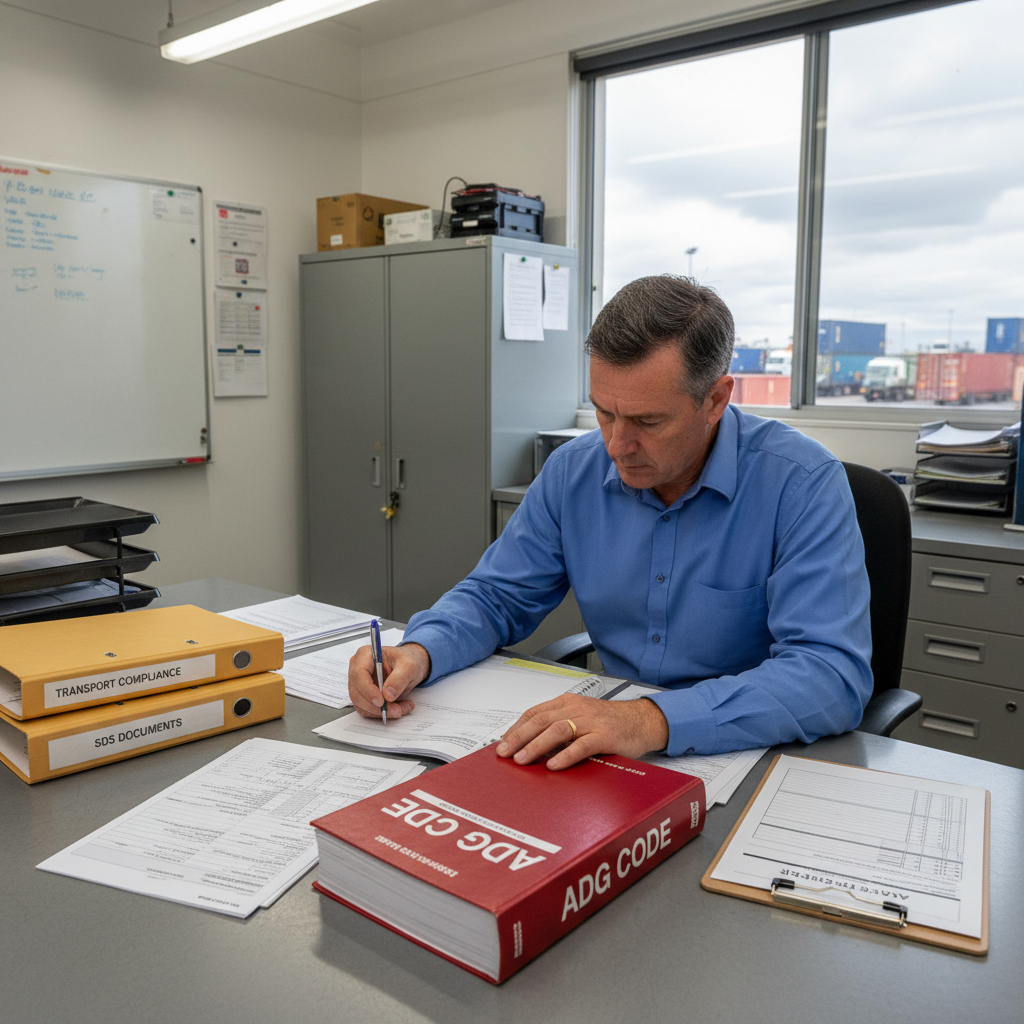
Every dangerous goods consignment must be accompanied by correct documentation. The primary document is the Dangerous Goods Declaration (or shipping papers), which records:
- The proper shipping name of the substance
- The UN number
- The hazard class and packing group
- The quantity being transported
- The name and address of the consignor (shipper)
- The name and address of the consignee (receiver)
- Emergency contact information
- Any special conditions or restrictions
This declaration must be kept in the cabin of the transport vehicle and be immediately available to the driver for presentation to law enforcement or emergency services.
For certain bulk transport (tankers, large quantities), additional documentation may include:
- Consignment notes — tracking documents for each shipment
- Safety Data Sheets (SDS) — detailed chemical/hazard information
- Placarding certificates — proof that the vehicle has been properly placarded
- Tank certificates — for tanker vehicles, proof of inspection and compliance
Documentation must be accurate and complete. Errors or omissions can result in the transport being halted at a roadside check.
Step 5 — Verify Compliance Before Transport
Before handing the consignment to the transport operator, the consignor (or their agent) must verify that:
- ✓ The substance is correctly classified according to the ADG Code
- ✓ The packaging is appropriate for the hazard class and packing group
- ✓ All containers are in good condition, sealed, and undamaged
- ✓ Hazard labels are correctly applied and clearly visible
- ✓ The transport unit (vehicle) is correctly placarded
- ✓ The Dangerous Goods Declaration is completed and accurate
- ✓ All documentation is present and accessible to the driver
- ✓ The substance is not incompatible with other goods on the vehicle
This verification should be documented — ideally, a checklist signed by both the consignor and the transport operator confirming that the consignment meets all ADG Code requirements. This creates a record of compliance if a roadside check or incident occurs.
What Happens if a Consignment Is Non-Compliant?
If a dangerous goods consignment is found to be non-compliant — missing labels, incorrect placarding, incomplete documentation, or improper packaging — the consequences can be severe:
- Roadside seizure: NSW EPA, NHVR, or police can stop and seize the vehicle
- Consignor penalties: Up to $550,000 fine and/or 5 years imprisonment for serious breaches
- Transport operator penalties: Up to $275,000 fine for knowingly transporting non-compliant goods
- Chain of Responsibility: Under the Heavy Vehicle National Law, senior managers can be personally liable
- Insurance implications: Non-compliance may void transport insurance
- Reputational damage: Breach records are public and visible to regulators, customers, and law enforcement
In the event of an incident (spill, fire, injury), non-compliance compounds criminal and civil liability significantly.
Common Mistakes in DG Consignment Preparation
Based on NSW EPA enforcement records, the most common mistakes are:
- Wrong classification — Using outdated or incorrect hazard class information
- Missing subsidiary hazard labels — Not reflecting all hazards the substance poses
- Incorrect placarding — Faded, obscured, or missing placards on the transport unit
- Incomplete documentation — Missing emergency contact, incomplete declarations, or no SDS on file
- Damaged or unsuitable packaging — Using containers not certified for the hazard class
- No verification procedure — Handing off consignments without checking compliance
- Incompatible goods mixed — Transporting substances together that the ADG Code forbids
Many of these errors stem from lack of training. Staff preparing consignments often don’t fully understand the ADG Code requirements or the consequences of non-compliance.
Dangerous Goods Preparation Training for NSW Businesses
The most effective way to ensure consistent, compliant consignment preparation is to ensure staff responsible for the task are properly trained. Kells Safety Centre (RTO 91528) delivers the Prepare for Transport of Dangerous Goods course, which covers:
- Classification of all 9 ADG Code classes
- Packaging and packing group requirements
- Labelling and subsidiary hazard rules
- Placarding standards for transport units
- Dangerous Goods Declarations and documentation
- Compliance verification and audit procedures
- Real-world case studies and common errors
The course is delivered face-to-face at Wetherill Park and can be conducted onsite for logistics and warehouse teams across NSW.
For drivers who will be transporting the consignments once prepared, the Dangerous Goods Licence Course (TLILIC0001) covers the transport driver’s obligations, emergency procedures, and safe vehicle operation.
Frequently Asked Questions
Who is responsible for preparing a dangerous goods consignment for transport?
The consignor — the party shipping the dangerous goods — is legally responsible for correct preparation. This includes manufacturers, distributors, freight forwarders, and warehouse operators preparing goods for road transport.
What information must be included on a dangerous goods label?
Dangerous goods labels (hazard labels) must show the hazard class symbol, class number, subsidiary hazard labels if applicable, proper shipping name, UN number, and technical name (for certain classes like Class 6 toxic substances).
What is the difference between a label and a placard in dangerous goods transport?
Labels are applied to individual packages (100 × 100 mm diamond-shaped) and show the hazard of that specific package. Placards are much larger (250 × 250 mm) and are attached to the transport unit (truck/trailer) to warn the public that dangerous goods are on board.
How do I classify a substance under the ADG Code?
Use the Supplier’s Safety Data Sheet (SDS) which indicates the hazard class, cross-reference with the ADG Code product list, and consult the ADG Code classification criteria for the class. If unsure, contact the manufacturer or a DG compliance specialist.
What packaging is required for Class 3 flammable liquids?
Packing Group I Class 3 liquids require certified UN-marked containers rated for that substance. Packing Group II and III allow standard industrial containers if properly sealed and in good condition. Always check the ADG Code packing requirements for the specific substance.
What documentation must accompany a dangerous goods consignment in NSW?
The primary document is a Dangerous Goods Declaration (shipping papers) containing the proper shipping name, UN number, class, packing group, quantity, consignor and consignee details, emergency contact, and special conditions. Safety Data Sheets and additional documentation may also be required.
What happens if I transport a non-compliant dangerous goods consignment?
Penalties for non-compliance can reach $550,000 fine and 5 years imprisonment for consignors, and $275,000 for transport operators. The vehicle can be seized, and Chain of Responsibility laws can hold senior managers personally liable. Insurance may be voided.
Is there training available for preparing dangerous goods consignments?
Yes. Kells Safety Centre delivers the Prepare for Transport of Dangerous Goods course covering classification, packaging, labelling, placarding, and documentation — all delivered face-to-face at Wetherill Park or onsite across NSW.
How often must dangerous goods documentation be reviewed?
Documentation should be reviewed before every shipment to ensure accuracy and compliance. Safety Data Sheets should be kept current — if a substance formulation changes, the SDS and classification may change, requiring updated labels and documentation.
What are the penalties for non-compliance in NSW?
Non-compliance penalties under NSW and Commonwealth transport law are substantial: consignors can face $550,000 fines and criminal charges; transport operators up to $275,000. Senior managers can be personally prosecuted under Chain of Responsibility laws.
Prepare DG Consignments Correctly — Training Available
Kells Safety Centre (RTO 91528) delivers the Prepare for Transport of Dangerous Goods course covering all ADG Code requirements. Face-to-face at Wetherill Park NSW or onsite delivery available across NSW.