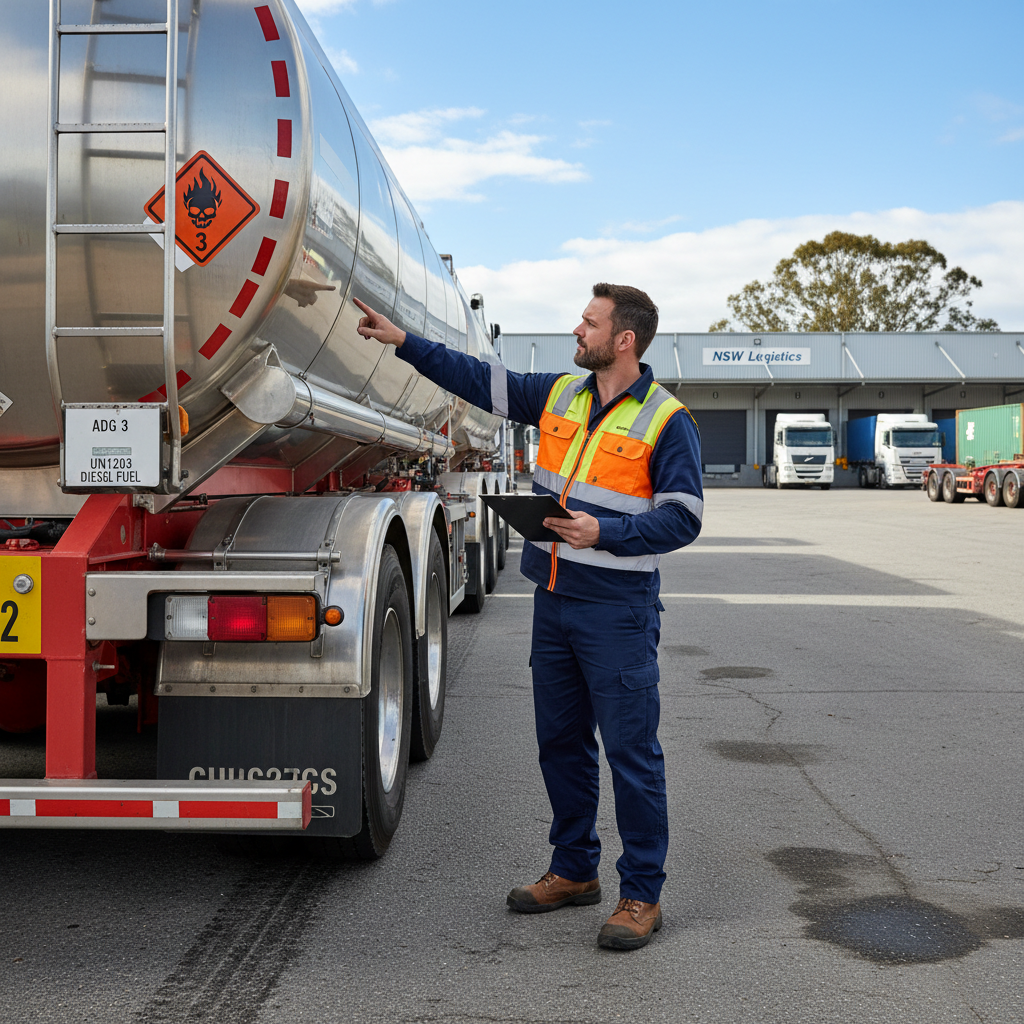
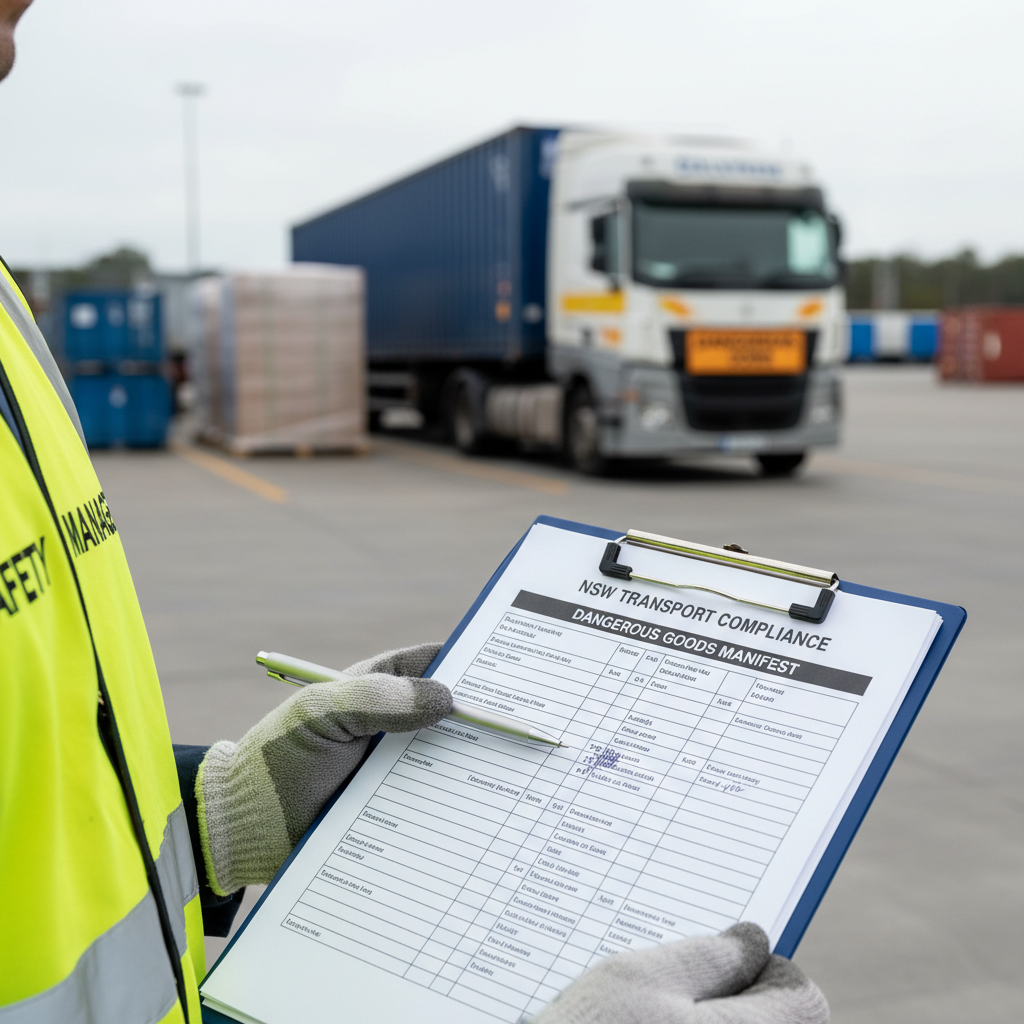
If you transport, store or handle dangerous goods in Australia, the Australian Dangerous Goods Code (ADG Code) is the rulebook. It defines what counts as dangerous goods, how they must be classified, packaged, labelled and placarded, and what your documentation obligations are. Getting this wrong isn’t a paperwork inconvenience — it can mean fines, licence cancellations and, in a worst case, a serious incident on NSW roads.
This guide breaks down the ADG Code in plain language — what it covers, who it applies to, and what it means for your drivers and business right now.
Quick Summary
The ADG Code is Australia’s national standard for transporting dangerous goods by road and rail
It’s based on the UN Model Regulations and covers 9 classes of dangerous goods
Applies to drivers, operators, consignors, packers and vehicle operators
Non-compliance carries serious penalties — including licence suspension
A Dangerous Goods Driver Licence is required for placardable quantities
What Is the ADG Code?
The Australian Dangerous Goods Code (formally: the Australian Code for the Transport of Dangerous Goods by Road and Rail) is the national regulatory framework that governs how dangerous goods move through Australia’s transport network. It’s published by the National Transport Commission (NTC) and adopted into law by each state and territory — including NSW — through their dangerous goods transport legislation.
The current edition is the 8th Edition, and it aligns with the UN Model Regulations on the Transport of Dangerous Goods. If your goods are classified as dangerous under the ADG Code, every step of the journey — from packaging and labelling through to driver training — is regulated.
Who Does the ADG Code Apply To?
The ADG Code creates obligations for everyone in the dangerous goods supply chain:
Consignors — the business or person handing goods over for transport. You’re responsible for correct classification, packaging, labelling and documentation.
Packers — responsible for correct packing and marking of dangerous goods packages.
Vehicle operators / carriers — responsible for ensuring vehicles meet ADG Code requirements, are properly placarded, and drivers hold the required licences.
Loaders and unloaders — anyone who loads or unloads a dangerous goods vehicle must follow safe handling procedures.
In NSW, the NSW EPA administers dangerous goods licences and enforcement under the Dangerous Goods (Road and Rail Transport) Act 2008.
The 9 Classes of Dangerous Goods
The ADG Code classifies dangerous goods into 9 main classes based on the primary hazard they present:
Class
Type
Examples
Class 1
Explosives
Mining explosives, fireworks
Class 2
Gases
LPG, acetylene, oxygen cylinders
Class 3
Flammable Liquids
Petrol, diesel, solvents
Class 4
Flammable Solids
Matches, metal powders
Class 5
Oxidising agents / Organic peroxides
Pool chemicals, fertiliser
Class 6
Toxic and Infectious
Pesticides, medical waste
Class 7
Radioactive Material
Nuclear medicine, uranium
Class 8
Corrosives
Battery acid, caustic soda
Class 9
Miscellaneous
Dry ice, lithium batteries, magnetised material
Each class has specific rules for packaging, labelling, placarding and transport. Some loads — particularly fuel tankers, chemicals and gases — require the vehicle to display specific placards identifying the hazard class.
When Is a Dangerous Goods Driver Licence Required?
Packaged dangerous goods — when total quantity exceeds placarding thresholds under the ADG Code
Class 1 explosives, Class 6.1 toxic, Class 7 radioactive — lower or specific thresholds apply
The NSW EPA issues and regulates dangerous goods driver licences. Kells Safety Centre delivers the full TLILIC0001 licence course in Wetherill Park and Wollongong — including EPA application processing — so your driver leaves with everything done.
Need a Dangerous Goods Licence? Kells delivers the full 2-day TLILIC0001 course in Wetherill Park and Wollongong — EPA application included.
The ADG Code requires specific documents to accompany every dangerous goods load. These are commonly called dangerous goods transport documents or manifests. Required information includes:
UN number and proper shipping name
Hazard class and packing group
Quantity and type of packaging
Consignor details
Emergency contact information
The driver must be able to produce these documents during a vehicle inspection. Transport for NSW and NSW Police conduct roadside checks — and non-compliant loads can be detained on the spot.
ADG Code and Safe Work NSW
While the ADG Code governs road transport, the Work Health and Safety Act 2011 (NSW) applies to the workplace handling of dangerous goods — including loading docks, warehouses and freight depots. Safe Work NSW regulates these obligations separately from the EPA.
If your workers store or handle dangerous goods in a fixed facility — rather than transporting them — the relevant training is Store and Handle Dangerous Goods. For workers who are involved in consigning or preparing DG loads without driving, Prepare for Transport of Dangerous Goods is the right course.
How Often Does the ADG Code Change?
The ADG Code is periodically revised to align with updates to the UN Model Regulations. The current 8th Edition has been in force since 2016, with amendments. Businesses operating in dangerous goods transport should subscribe to NTC updates and ensure their training — and driver licences — remain current.
Dangerous goods driver licences in NSW are issued for one to five years, depending on the class of goods. Renewal requires a refresher course and re-application through the NSW EPA.
Key Takeaways
The ADG Code is Australia’s national dangerous goods transport standard — adopted by NSW law
It covers 9 classes of goods and applies to the entire supply chain, not just drivers
Drivers transporting placardable quantities need a valid NSW DG Driver Licence (TLILIC0001)
Documentation must travel with every load — drivers must produce it on request
Kells Safety Centre (RTO 91528) delivers TLILIC0001 training with EPA application included at Wetherill Park and Wollongong
ADG Code stands for Australian Dangerous Goods Code — formally titled the Australian Code for the Transport of Dangerous Goods by Road and Rail. It is published by the National Transport Commission and provides the national framework for dangerous goods transport regulation in Australia.
Is the ADG Code a legal requirement in NSW?
Yes. The ADG Code has been adopted into NSW law through the Dangerous Goods (Road and Rail Transport) Act 2008 and associated regulations. Non-compliance is a criminal offence under NSW law, with penalties including fines and licence cancellation.
What is the difference between the ADG Code and the IMDG Code?
The ADG Code applies to transport by road and rail within Australia. The IMDG Code (International Maritime Dangerous Goods Code) applies to sea transport. They share the same UN classification system but have different packaging and documentation requirements for their respective transport modes.
Do I need a dangerous goods licence to transport Class 3 flammable liquids?
Yes, if the quantity exceeds placarding thresholds. Most fuel tankers and bulk chemical deliveries trigger the placard requirement, meaning the driver must hold a valid NSW Dangerous Goods Driver Licence (TLILIC0001). Kells Safety Centre delivers this course at Wetherill Park and Wollongong, with EPA processing included.
What is a UN number?
A UN number is a four-digit code assigned by the United Nations to identify specific dangerous goods or categories of goods. For example, UN 1203 is petrol and UN 1075 is petroleum gases (LPG). Every placarded load must display the relevant UN number on its placard.
What happens if a driver is caught without the correct DG licence?
Driving with a dangerous goods load that requires a licence — without holding that licence — is a serious offence in NSW. Penalties include significant fines, the vehicle can be detained, and the transport operator can also face prosecution. The NSW EPA and Transport for NSW both conduct roadside compliance checks.
How do I know if my load needs to be placarded?
The ADG Code sets out placarding thresholds for each class of dangerous goods. Your dangerous goods transport document should indicate whether the load is a placardable quantity. If you’re unsure, Kells Safety Centre can advise — and our Dangerous Goods Awareness Course covers placarding requirements in detail.
Where can I find the official ADG Code?
The ADG Code is published by the National Transport Commission. You can access it through the National Transport Research Organisation (NTRO). Your state regulator — the NSW EPA — can also advise on applicable editions and amendments.
Ready to get your team trained and compliant? Browse all Kells Safety Centre transport safety courses — RTO 91528, delivering across NSW.