

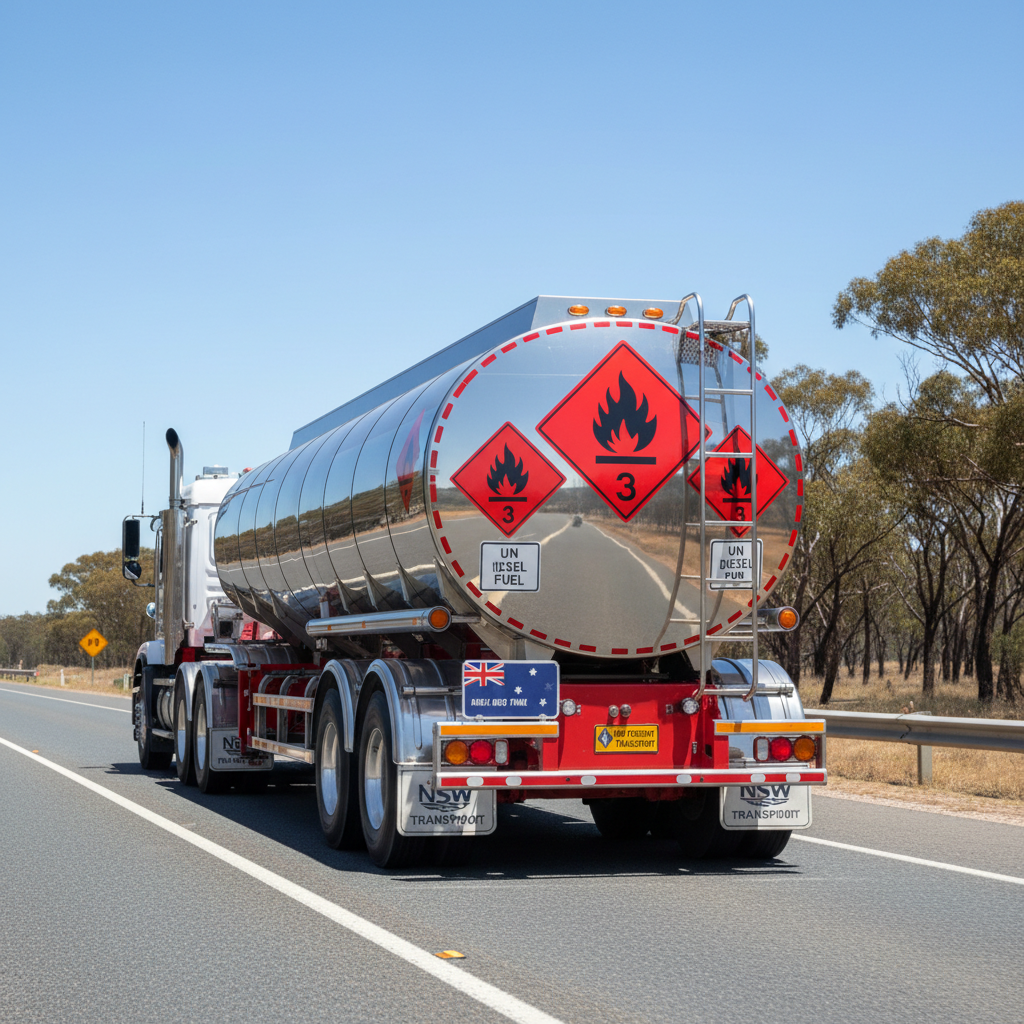
Every truck carrying dangerous goods on NSW roads must display the right placards. Get this wrong and you’re not just risking a fine — you’re putting other road users at risk and exposing your business to serious liability. Dangerous goods placards are legally required under the Australian Dangerous Goods (ADG) Code, and knowing which placard goes where is fundamental compliance for anyone in the transport chain.
This guide covers what DG placards are, when they’re required, which classes they apply to, and what drivers and operators need to know to stay compliant in NSW.
- Dangerous goods placards are diamond-shaped hazard warning signs required on DG transport vehicles
- Required when a load reaches “placardable quantities” under the ADG Code
- Different placard types apply: Class labels, UN number panels, Emergency Information Panels (EIPs)
- Drivers transporting placardable loads must hold a NSW DG Driver Licence (TLILIC0001)
- Placarding is enforced by Transport for NSW and NSW Police at roadside checks
What Are Dangerous Goods Placards?
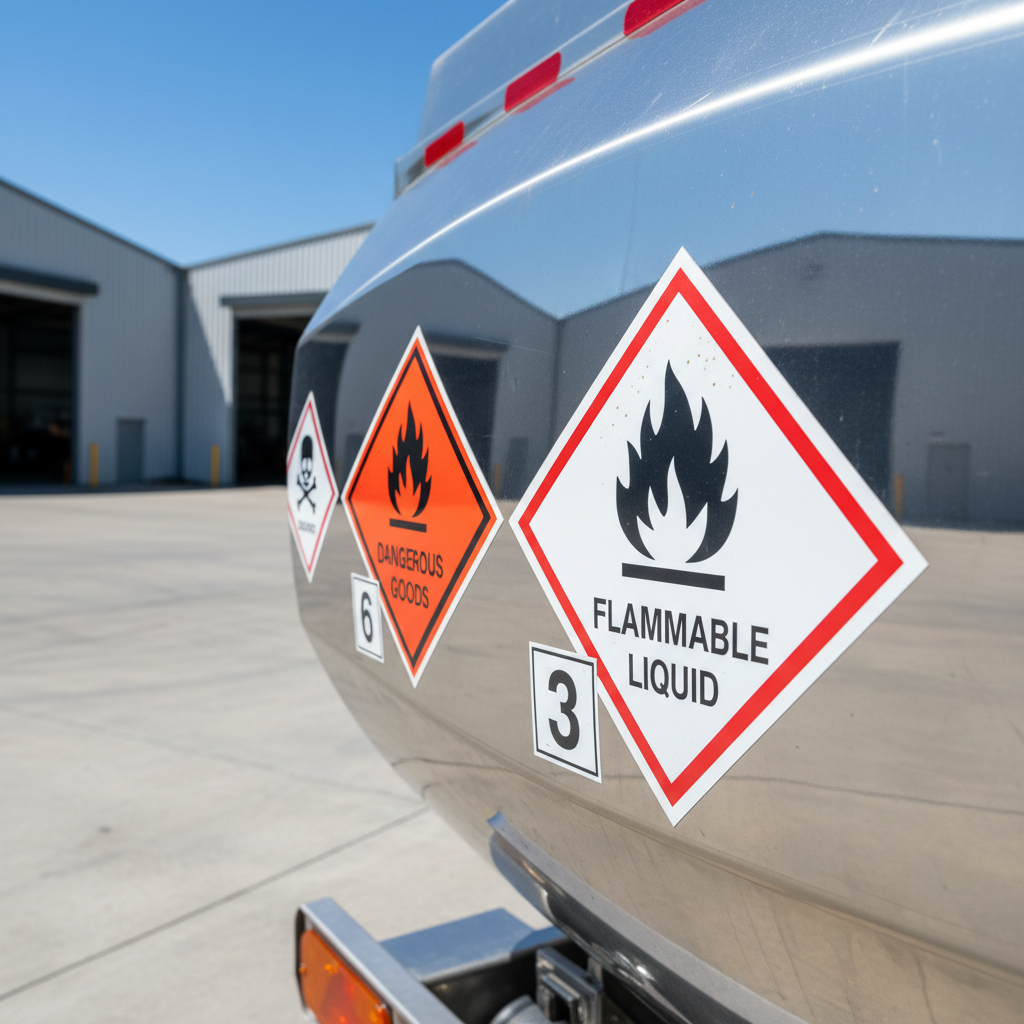
Dangerous goods placards are standardised diamond-shaped signs displayed on the exterior of vehicles, containers or bulk packages carrying hazardous materials. They communicate the hazard class of the load to emergency services, other road users and enforcement officers — at a glance, from a safe distance.
In Australia, placarding is governed by the ADG Code 8th Edition and is enforced under state dangerous goods transport legislation. In NSW, that’s the Dangerous Goods (Road and Rail Transport) Act 2008, administered by the NSW EPA.
Types of Dangerous Goods Placards
There are three main types used in road transport:
1. Class Labels (Hazard Diamond)
These are the primary placard type — coloured diamond-shaped signs that identify the hazard class of the goods. Each of the 9 ADG classes has a distinct colour and symbol. Class 3 (Flammable Liquids) is red with a flame symbol; Class 8 (Corrosives) is black and white with a liquid dripping symbol, and so on.
2. UN Number Panels
Orange rectangular panels displaying the UN number (a four-digit code) and, on some vehicles, the hazard identification number (HIN). These are required on bulk loads and tank vehicles.
3. Emergency Information Panels (EIPs)
EIPs are larger panels required on vehicles carrying certain bulk dangerous goods. They include: the UN number, hazchem code, specialist advice telephone number, product name and the hazard class diamond. EIPs are critical for emergency responders at incident scenes.
When Are Placards Required?
Placarding is triggered when a load reaches the placardable quantity threshold set out in the ADG Code. These thresholds vary by class:
| Class | Type | Threshold (approx) |
|---|---|---|
| Class 1 | Explosives | Any quantity (by permit) |
| Class 2 | Gases | 500 kg/L or bulk |
| Class 3 | Flammable Liquids | 1,000 L or bulk |
| Class 4 | Flammable Solids | 500 kg |
| Class 5 | Oxidisers | 500 kg/L |
| Class 6.1 | Toxic | 100 kg/L |
| Class 8 | Corrosives | 1,000 L or 1,000 kg |
Always verify the exact thresholds against the current ADG Code 8th Edition, as specific packing groups and substance types can affect the applicable threshold for your load.
Where Must Placards Be Displayed?
The ADG Code specifies exact placement. Generally, class labels must appear on all four sides of a vehicle or container. For tank vehicles (fuel tankers, etc.), placards appear on both sides and the rear. UN number panels are required on the front and rear. Always refer to the ADG Code tables for the exact configuration for your vehicle type and load.
Who Needs a Dangerous Goods Driver Licence?
Any driver transporting a placardable quantity of dangerous goods must hold a valid NSW Dangerous Goods Driver Licence (TLILIC0001). This applies to fuel tanker drivers, chemical transporters, gas delivery drivers and others carrying loads that meet the threshold.
The licence covers: ADG Code knowledge, placard recognition, emergency procedures, documentation requirements, and your obligations as a driver. It’s issued by the NSW EPA after successful completion of the TLILIC0001 training course.
Transporting placardable quantities of dangerous goods? Get your NSW DG Driver Licence with Kells Safety Centre — 2-day course in Wetherill Park or Wollongong, EPA application included.
Book DG Licence Course →Placards and the Consignor’s Responsibility
It’s not just drivers who carry obligations. Consignors — businesses that hand dangerous goods over for transport — must ensure goods are correctly classified, labelled and that the transport operator is aware of placarding requirements. If you’re dispatching loads without properly verifying this chain, your business carries exposure under both the ADG Code and NSW WHS legislation.
The Prepare for Transport of Dangerous Goods course is designed for consignors, logistics coordinators and anyone preparing dangerous goods loads for transport — covering classification, packaging, documentation and placarding requirements end to end.
Key Takeaways
- DG placards are legally required on any vehicle carrying placardable quantities under the ADG Code
- Three main types: class hazard diamonds, UN number panels, and Emergency Information Panels (EIPs)
- Thresholds vary by class — check the ADG Code 8th Edition for your specific goods
- Drivers carrying placardable loads must hold a NSW DG Driver Licence (TLILIC0001)
- Both drivers and consignors have compliance obligations — get it right or face serious penalties
Frequently Asked Questions
What is a dangerous goods placard?
A dangerous goods placard is a standardised diamond-shaped hazard warning sign that must be displayed on vehicles, containers or packages carrying dangerous goods above certain quantity thresholds. Placards communicate the hazard class to emergency services and other road users, and are required under the Australian Dangerous Goods (ADG) Code.
Do I need placards if I’m carrying small quantities of dangerous goods?
Not necessarily. Placarding is only required when a load reaches the “placardable quantity” threshold specified in the ADG Code. These thresholds vary by hazard class. Below the threshold, standard labelling and documentation still apply, but vehicle placards may not be required. Check the ADG Code or seek advice if you’re unsure.
What is an Emergency Information Panel (EIP)?
An EIP is a larger placard required on vehicles carrying certain bulk dangerous goods. It contains the UN number, hazchem code, product name, a specialist emergency advice telephone number, and the hazard class diamond. EIPs are designed to give emergency responders critical information at an incident scene quickly.
Can I drive without a DG licence if my load has placards?
No. If your vehicle is required to display dangerous goods placards, the driver must hold a valid NSW Dangerous Goods Driver Licence (TLILIC0001). Driving a placarded vehicle without the required licence is a serious offence under NSW law.
Where must placards be placed on a vehicle?
The ADG Code specifies exact placement requirements. Generally, hazard class diamonds must be on all four sides of containers and on both sides and the rear of tank vehicles. UN number panels are required on the front and rear. Exact requirements depend on your vehicle type and the goods being transported.
Who enforces dangerous goods placarding in NSW?
Dangerous goods placarding is enforced by Transport for NSW authorised officers, NSW Police, and the NSW EPA. Roadside checks are conducted routinely. Vehicles found with non-compliant placarding can be detained, and operators and drivers can face significant fines and prosecution.
What happens if placards are incorrect or missing?
Operating a vehicle with missing, incorrect or obscured dangerous goods placards is an offence under the Dangerous Goods (Road and Rail Transport) Act 2008 (NSW). Penalties include fines for both the driver and the transport operator. In the event of an incident, a lack of correct placarding can also significantly complicate emergency response.
Get your team compliant — browse all Kells Safety Centre dangerous goods and transport safety courses across NSW.
View All Courses →