

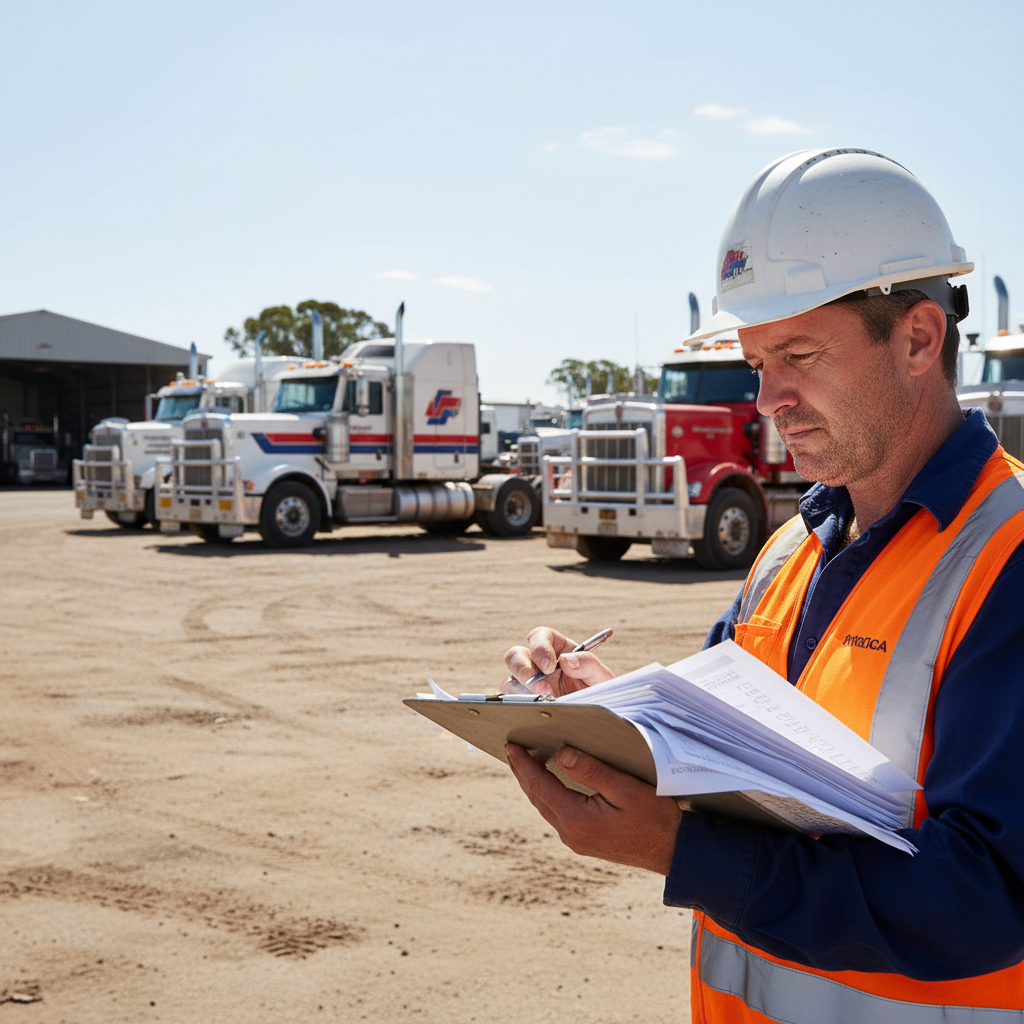
Transport compliance in NSW is not optional — it is legally mandatory. Whether you operate a single truck or a fleet of 50 vehicles, you are subject to the Heavy Vehicle National Law (HVNL), dangerous goods regulations, workplace safety laws, and Chain of Responsibility (CoR) provisions. Miss even one area, and you face penalties up to $500,000 for corporations and criminal liability for executives.
This checklist breaks down the 12 critical compliance areas every transport business in NSW must address — and gives you a framework to audit yourself before regulators do.
- Chain of Responsibility makes everyone in the transport task legally liable — not just drivers
- Dangerous goods licensing, fatigue management, load restraint, and scheduling are major compliance risk areas
- The NHVR, NSW EPA, and Safe Work NSW conduct regular audits and have zero tolerance for systemic non-compliance
- Documented training records are your primary defence in any regulatory investigation
- Fines for corporations can reach $500,000 per offence — with personal liability for executives
Why Transport Compliance Matters More Than Ever in NSW
The 2018 amendments to the Heavy Vehicle National Law significantly strengthened CoR provisions. Regulators no longer need to prove a driver was at fault — they can prosecute any party in the transport chain whose systems, schedules, or decisions contributed to a safety breach. That means operators, schedulers, loaders, consignors, and executives are all in scope.
The NHVR, NSW Police, and SafeWork NSW conduct roadside inspections, depot audits, and document checks. The question in any investigation is always the same: did you take all reasonable steps to prevent the breach? If you cannot demonstrate that with records, training certificates, and documented processes, you are exposed.
Training That Covers Your Compliance Obligations
Kells Safety Centre (RTO 91528) delivers accredited dangerous goods, fatigue management, and transport safety training across NSW.
The NSW Transport Compliance Checklist: 12 Critical Areas
1. Chain of Responsibility (CoR) Obligations
Every party in the transport task — operators, schedulers, loaders, consignors, freight owners — must take all reasonable steps to prevent HVNL breaches. Document your CoR policies, train your staff, and maintain records of compliance activities. CoR is the foundation of everything else on this list.
2. Dangerous Goods Licensing
Any driver transporting a placard load of dangerous goods by road in NSW must hold a valid dangerous goods licence (TLILIC0001). Check licence currency for every DG driver in your fleet. Licences must be renewed before expiry — there is no grace period. Your consignment records must confirm the driver’s licence was valid at the time of transport.
3. Fatigue Management — Drivers
Drivers must operate within their applicable work and rest hour limits — standard hours, BFM, or AFM — and maintain accurate work diaries. Operators must have systems to monitor driver fatigue compliance. Check work diary records regularly. If drivers are operating under BFM, confirm their accreditation is current and the operator’s NHVR accreditation is in place.
4. Fatigue Management — Schedulers
Schedulers must not issue run times that cannot be completed within legal work and rest hour limits. This is a prosecutable offence independent of whether a driver actually breaches fatigue rules. Ensure all schedulers have completed schedulers fatigue management training and can demonstrate knowledge of applicable work/rest limits.
5. Load Restraint
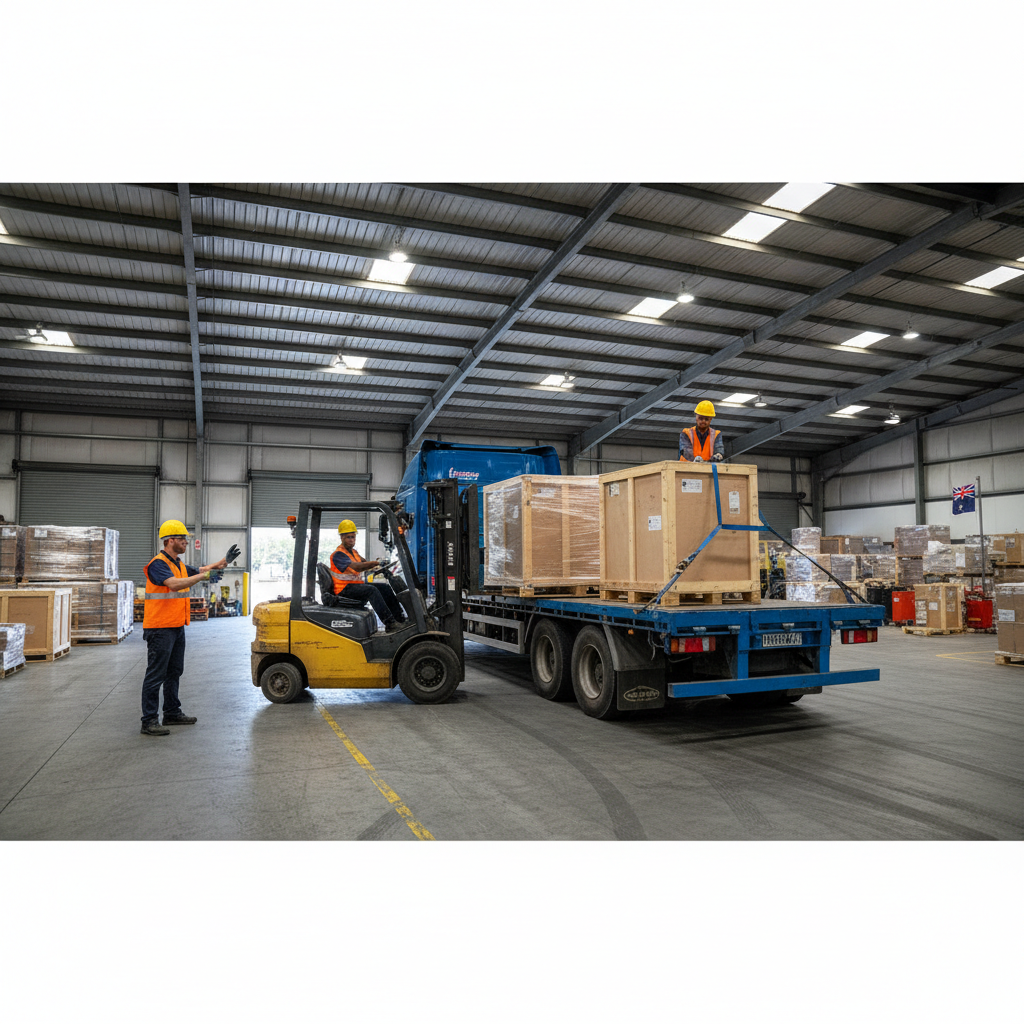
All loads must be restrained in accordance with the Load Restraint Guide published by the NHVR. Loaders, drivers, and operators all carry CoR responsibility for load compliance. Check that restraint equipment is in good condition, that drivers understand applicable performance standards, and that your loading procedures are documented. The Safe Load Program (SLP) covers load restraint requirements for drivers and operators.
6. Vehicle Mass and Dimension Limits
Vehicles must not exceed their registered mass limits or applicable dimension limits. Check Gross Vehicle Mass (GVM), Gross Combination Mass (GCM), and axle load limits before dispatch. Mass management systems, permits for oversize/overmass loads, and route pre-approval where required must all be in order before a vehicle moves.
7. Dangerous Goods Documentation
Every placarded dangerous goods load must be accompanied by correct documentation — a transport document (consignment note) that complies with the Australian Dangerous Goods Code (ADG Code). The transport document must identify the UN number, proper shipping name, class, packing group, quantity, and emergency contact. Check that your prepare for transport procedures are being followed on every DG consignment.
8. Vehicle Safety and Maintenance
Vehicles must be maintained in a roadworthy condition at all times. Keep records of scheduled maintenance, pre-departure checks, and defect reporting. Drivers must conduct daily pre-departure inspections and report defects immediately. Maintenance records must be retained and available for inspection.

9. Dangerous Goods Vehicle Equipment
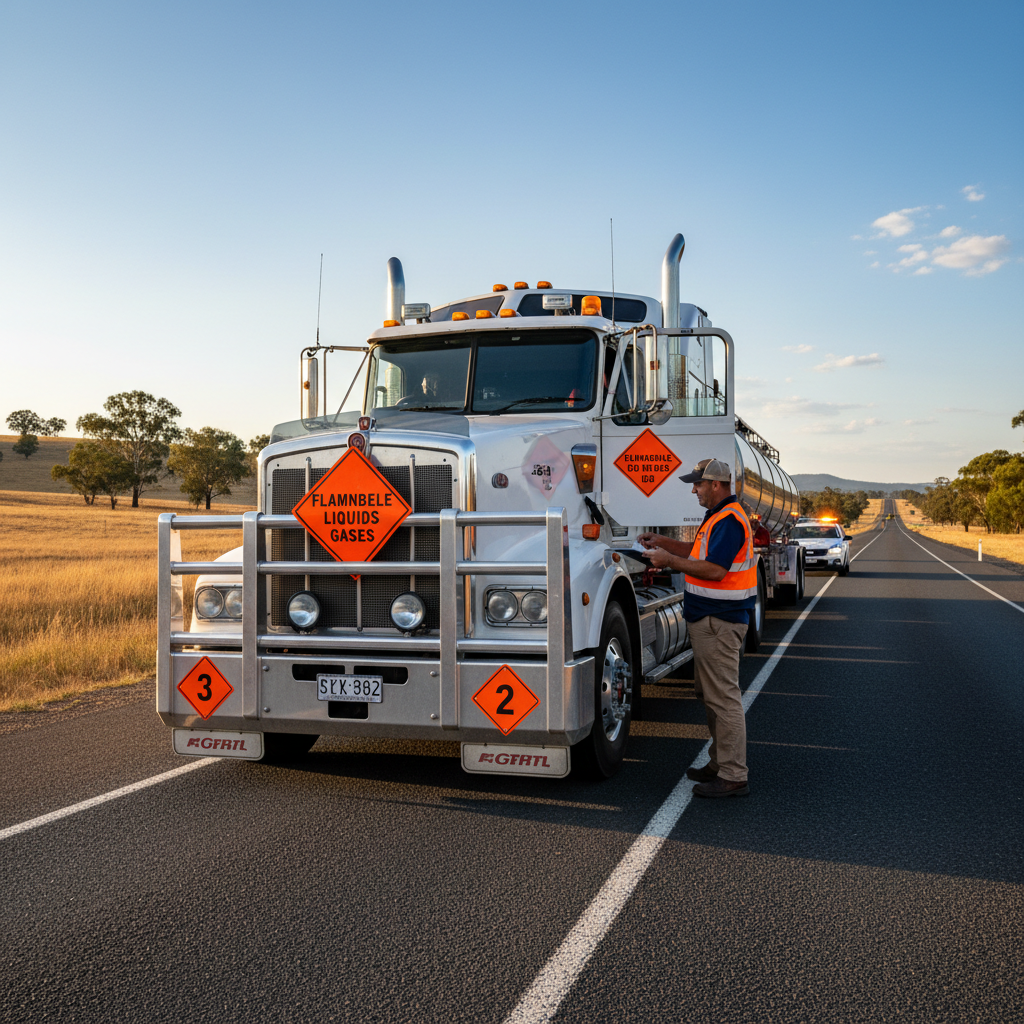
Vehicles transporting placard loads must carry mandatory safety equipment as required by ADG Code Table 12.2 — including fire extinguishers, first aid kits, emergency procedure guides, breakdown triangles, and class-appropriate PPE. Check equipment is present, in-date, and serviceable before every DG run. Document your equipment checks.
10. Workplace Health and Safety (WHS)
Transport operators have WHS obligations under the Work Health and Safety Act 2011 (NSW) including safe work systems, hazard identification, incident reporting, and worker training. Dangerous goods storage at depots must comply with Safe Work NSW requirements for storage, segregation, ventilation, and spill management. Store and handle dangerous goods training covers depot compliance obligations.
11. Training Records and Certification
Arguably the most important item on this checklist. In any NHVR, EPA, or SafeWork investigation, your training records are your primary evidence of due diligence. Maintain a current register of all driver licences and certificates — DG licences, fatigue management certificates, SLP cards, Blue Cards. Know the expiry date of every certificate in your fleet. A driver operating with an expired DG licence exposes both the driver and the operator to prosecution.
12. Incident Reporting and Investigation
All notifiable incidents — dangerous goods spills, serious injuries, significant near-misses — must be reported to the relevant authority (NSW EPA for DG incidents, SafeWork NSW for workplace injuries, NHVR for heavy vehicle incidents). Operators must have documented incident reporting procedures and must conduct root cause investigations. Records of investigations and corrective actions must be retained.
Building Your Compliance System: What Good Looks Like
- Every driver has a current, valid licence or certificate for their role — DG, fatigue, SLP
- Schedulers have documented knowledge of work/rest hour limits and issue compliant run schedules
- Load restraint procedures are written down, trained, and followed on every load
- DG documentation is checked before dispatch — not after
- Vehicle maintenance records are complete and up to date
- Training register is current — expiry dates tracked, renewals booked in advance
- Incident reporting is documented and consistent
The businesses that fare best in NHVR and SafeWork audits are not necessarily those with zero incidents — they are those with documented systems that demonstrate consistent effort to comply. A binder of training certificates and a documented scheduling process is worth more in a prosecution than a verbal assurance that “we always do it right.”
Which Training Courses Cover These Requirements?
Kells Safety Centre (RTO 91528) delivers accredited transport safety training covering the major compliance areas in this checklist:
- Dangerous Goods Licence Course (TLILIC0001) — drivers transporting placard loads
- Drivers Fatigue Management Course — heavy vehicle drivers
- Schedulers Fatigue Management Course — dispatchers and operations managers
- Safe Load Program (SLP) — load restraint compliance
- Prepare for Transport of Dangerous Goods — DG consignment documentation
- Store and Handle Dangerous Goods — depot and warehouse staff
- Dangerous Goods Awareness — staff in proximity to DG operations
Training is delivered face-to-face at Wetherill Park and Wollongong/Dapto, with onsite delivery available for larger groups. All courses are nationally recognised under the Australian Qualifications Framework.
Frequently Asked Questions
What laws govern transport compliance in NSW?
The primary legislation includes the Heavy Vehicle National Law (HVNL), the Australian Dangerous Goods Code (ADG Code), the Work Health and Safety Act 2011 (NSW), and the Protection of the Environment Operations Act 1997 (NSW) for dangerous goods. CoR provisions under HVNL extend liability across all parties in the transport task.
Who is responsible for transport compliance in a logistics business?
Under Chain of Responsibility, everyone involved in the transport task carries responsibility — operators, schedulers, loaders, consignors, freight owners, and executives. The NHVR can prosecute any party whose decisions or systems contributed to a breach, independently of the driver.
How often should transport businesses audit their compliance?
At minimum, a formal compliance audit should be conducted annually. However, key areas — training certificate expiry, vehicle maintenance records, and driver work diary checks — should be reviewed monthly. Schedule certificate renewals at least 6 weeks before expiry to allow for course bookings and processing time.
What records must a transport business keep for compliance?
Essential records include: driver licences and training certificates (with expiry dates), work diaries and fatigue records, vehicle maintenance logs, load restraint records, DG transport documents (consignment notes), incident reports, scheduling records, and any CoR compliance policies or procedures. Records should be retained for a minimum of 3 years, or longer if specified by the relevant regulator.
What are the penalties for transport CoR breaches in NSW?
Under HVNL, penalties for CoR breaches can reach $50,000 for individuals and $500,000 for corporations per offence. Serious breaches — particularly those that contribute to fatalities — can trigger executive liability provisions and criminal prosecution. NSW EPA penalties for dangerous goods incidents can be additional and separate.
Do all drivers transporting dangerous goods need a DG licence?
Yes, if they are transporting a placard load of dangerous goods by road in NSW. A placard load is defined by the quantities specified in the ADG Code for each class of dangerous goods. Drivers transporting below placard load quantities may not require a DG licence but should have completed DG awareness training.
What is the Safe Load Program and is it mandatory?
The Safe Load Program (SLP) is a NSW government-endorsed load restraint training program that awards drivers and operators an SLP licence card on completion. While it is not universally mandated by legislation for all operators, it is increasingly required by major freight clients and provides evidence of load restraint competency in any CoR investigation.
How does dangerous goods awareness training differ from a DG licence?
A dangerous goods licence (TLILIC0001) is required for drivers transporting placard loads of DG by road — it is a regulatory requirement. DG awareness training is for staff who work in proximity to dangerous goods but are not transport drivers — warehouse staff, depot workers, office personnel. It does not qualify a driver to transport placard loads.
Cover Your Transport Compliance Obligations
Kells Safety Centre (RTO 91528) delivers accredited dangerous goods, fatigue management, load restraint, and transport safety training across NSW. Wetherill Park and Wollongong.